
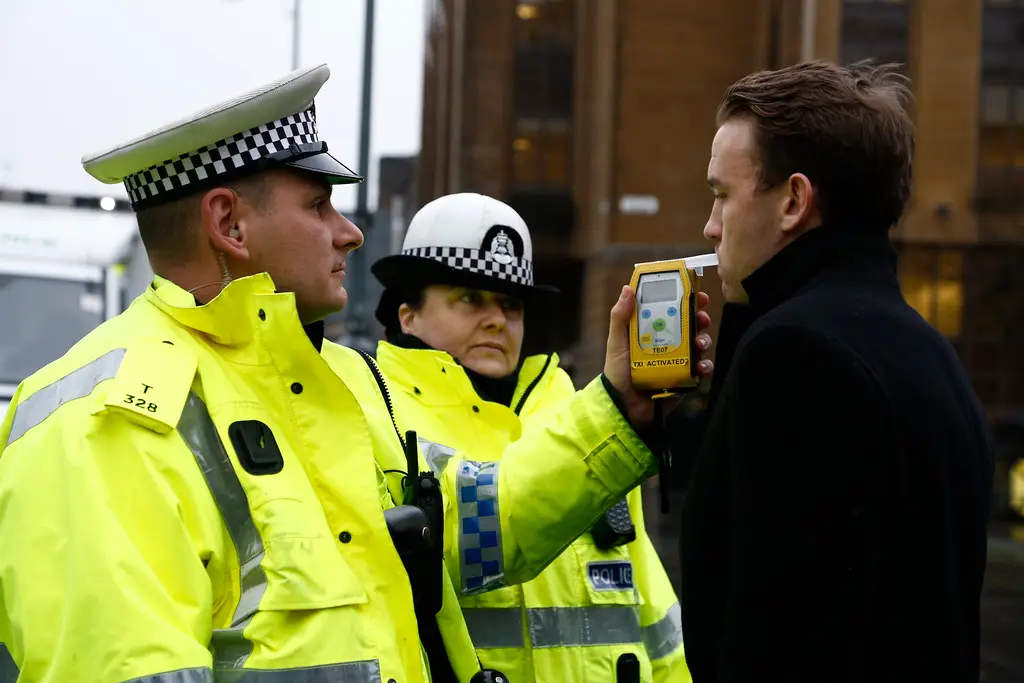
Mid-Range Drink Driving (Mid-Range PCA)
Mid-range PCA is an offence under section 110(2) of the Road Transport Act 2013 (NSW), with a maximum penalty of 9 months imprisonment and a 12-month automatic disqualification for first offenders.
About mid-range PCA in NSW
Driving with a mid-range prescribed concentration of alcohol (PCA) is an offence under section 110(2) of the Road Transport Act 2013 (NSW). The offence is committed when a person drives, or attempts to drive, a motor vehicle on a road with a blood or breath alcohol concentration of 0.08 or more, but less than 0.15.
A mid-range PCA is a major offence under the Road Transport Act — meaning it carries much more serious consequences than a low-range PCA, including potential imprisonment and substantially longer disqualification.
Maximum penalty for mid-range PCA in NSW
The penalties for mid-range PCA under section 110(2) are set out in the Road Transport Act 2013 and the NSW Local Court Bench Book. They are:
First offence
- Maximum fine: 20 penalty units ($2,200)
- Maximum imprisonment: 9 months
- Automatic licence disqualification: 12 months (the default)
- Minimum disqualification: 6 months (the lowest the court can reduce it to)
- Mandatory Interlock Order (MIO): Not applicable for a first mid-range offence (unless the matter is treated as a second offence because of a prior alcohol-related major offence within the last 5 years)
Second / subsequent offence
- Maximum fine: 30 penalty units ($3,300)
- Maximum imprisonment: 12 months
- Automatic licence disqualification: 3 years
- Minimum disqualification: 12 months
- Mandatory Interlock Order: Disqualification of 6 months minimum / 9 months maximum, followed by a 24-month interlock program
A “second offence” is calculated based on alcohol-related major offences in the previous 5 years, not whether you have any PCA history at all.
Can you get a section 10 for mid-range PCA in NSW?
Yes — but it is hard. The NSW Court of Criminal Appeal’s guideline judgment for first-offence high-range PCA (Application by the Attorney General under s 37 Crimes (Sentencing Procedure) Act 1999 (No 3 of 2002) [2004] NSWCCA 303) applies most directly to high-range matters, but its emphasis on general deterrence and the prevalence of PCA offending informs mid-range sentencing by analogy. As a result, a section 10 dismissal or Conditional Release Order without conviction for mid-range PCA is the exception rather than the rule.
To have any prospect of a non-conviction outcome a court would generally need to be satisfied of factors such as:
- The offending is at the lower end of objective seriousness (closer to 0.08 than 0.15)
- The driving was a short distance, at a low-risk time, no collision, no aggressive driving
- The accused has no prior traffic record and no relevant criminal history
- An early guilty plea was entered
- The accused has completed (or enrolled in) a Traffic Offender Intervention Program
- The accused has demonstrated genuine insight and remorse — typically through a letter of apology and a psychologist’s report
- A conviction would have substantial collateral consequences disproportionate to the offending (eg loss of employment, visa cancellation, professional registration impact)
- The accused has provided strong character references speaking to their otherwise good character
Even with all of the above, the court may still record a conviction and impose a 6-month minimum disqualification. The strategy needs to be carefully prepared.
Can you avoid a conviction for mid-range PCA?
The court has discretion under the Crimes (Sentencing Procedure) Act 1999 to deal with the matter by way of:
- Section 10(1)(a) dismissal — the charge is proved but no conviction is recorded
- Conditional Release Order (CRO) without conviction under section 10A
- Conditional Release Order with conviction
- Fine with a conviction
- Community Correction Order with a conviction
- Intensive Correction Order (custodial sentence served in the community)
- Full-time imprisonment (rare for first-offence mid-range PCA but available — up to 9 months)
Karnib & Co. has secured non-conviction outcomes for clients facing mid-range PCA charges in appropriate cases. See, for example, our Mid-Range PCA — charge withdrawn case study.
Sentencing factors the court will consider
When sentencing for mid-range PCA, the magistrate considers:
- The reading — where it falls between 0.08 and 0.15
- The nature and seriousness of the driving (distance, time of day, traffic conditions, manner of driving)
- Whether a collision occurred and any injury or property damage
- How the offence was detected — random breath test vs erratic driving / pursuit
- The accused’s traffic history and any criminal history
- Whether an early guilty plea was entered
- Completion of a Traffic Offender Intervention Program
- The accused’s need for a licence (for employment, family, medical)
- Character references and other subjective material
- Steps taken to address alcohol use (counselling, abstinence, support programs)
Mandatory Interlock Orders
A Mandatory Interlock Order (MIO) under section 211 of the Road Transport Act 2013 requires the driver to install an approved alcohol interlock device — linked to the vehicle’s ignition — and to participate in the interlock program for a specified period.
For a second mid-range PCA offence, an MIO is mandatory: a 6–9 month disqualification followed by 24 months on the interlock program.
A court can make an interlock exemption order under section 212 only if satisfied that:
- The offender does not have access to a vehicle to install the interlock device in; or
- The offender has a medical condition (diagnosed by a medical practitioner) preventing them from operating the device, and modification is not reasonably practicable; or
- For a first mid-range PCA offence dealt with as a first MIO, that:
- the order would cause severe hardship; and
- an exemption is more appropriate in all the circumstances than the MIO.
The Act expressly provides that an interlock exemption order must not be made merely because:
- The offender cannot afford the device; or
- The offender would be prevented from driving for work; or
- The vehicle’s registered owner refuses to consent to installation.
Section 206B — backdating disqualification
Section 206B of the Road Transport Act 2013 applies where a licence has been suspended under the Act or its regulations for an alleged offence (eg an immediate police suspension after the breath analysis). The court is required to take that period of suspension into account when fixing any disqualification on conviction — in practical terms, the disqualification can be backdated to start from the date of suspension. This is important because suspensions imposed at the roadside or by police can otherwise extend the total time off the road.
Defences and arguments for mid-range PCA
Genuine defences are limited because the offence is largely an objective one (the reading is what it is), but arguments that may be available include:
- Honest and reasonable mistake of fact about the alcohol concentration — eg the accused believed enough time had passed
- Reading inaccuracy — challenging the breath analysis procedure, calibration of the device, or chain of custody
- The “two-hour rule” — clause 2(2) of Schedule 3 of the Road Transport Act 2013 provides that a breath analysis must not be conducted more than 2 hours after the driving event; a sample taken outside that window may be excluded
- The “home safely” rule — clause 2(2) of Schedule 3 also provides that police cannot require a breath analysis from a person at their home
- You were not the driver — identity is in issue
- The vehicle was not on a “road” or “road-related area” as defined
- Necessity / duress in narrow circumstances
Mid-range PCA FAQs
What does PCA stand for?
Prescribed Concentration of Alcohol — the legal definition of blood or breath alcohol concentration in the Road Transport Act 2013.
Will I lose my licence on the spot?
Yes. Police have power under section 224 of the Road Transport Act 2013 to issue an immediate licence suspension notice at the roadside for mid- and high-range PCA, which takes effect from the time of arrest. You can lodge an appeal against the suspension — strict time limits apply.
How long is the disqualification for first-offence mid-range PCA in NSW?
The automatic disqualification is 12 months, which the court can reduce to 6 months minimum if persuaded the circumstances warrant it. The court cannot disqualify for less than 6 months on a first mid-range offence.
Do I have to do a Traffic Offender Program?
Not legally — but completing the Traffic Offender Intervention Program (TOIP) before sentencing is one of the most influential things you can do. It demonstrates insight, addresses the underlying behaviour, and is referred to by the bench when fixing the disqualification period.
Is mid-range PCA an indictable offence?
No. Mid-range PCA is a summary offence dealt with in the Local Court. It is, however, a major offence under the Road Transport Act, which is what triggers the major-offence sentencing regime and the second-offence escalations.
Charged with mid-range PCA? Contact us today
Mid-range PCA matters are serious — they carry real prison exposure, automatic 12-month disqualification, and (on a second offence) mandatory interlock. The strategy needs to be set before your first mention. Karnib & Co. acts for mid-range PCA matters across NSW from our Liverpool and Wollongong offices.
Contact us for a free initial consultation. We are available 24/7 for urgent matters and licence suspension appeals.

Need legal advice?
Speak to our team today. Available 24/7.