
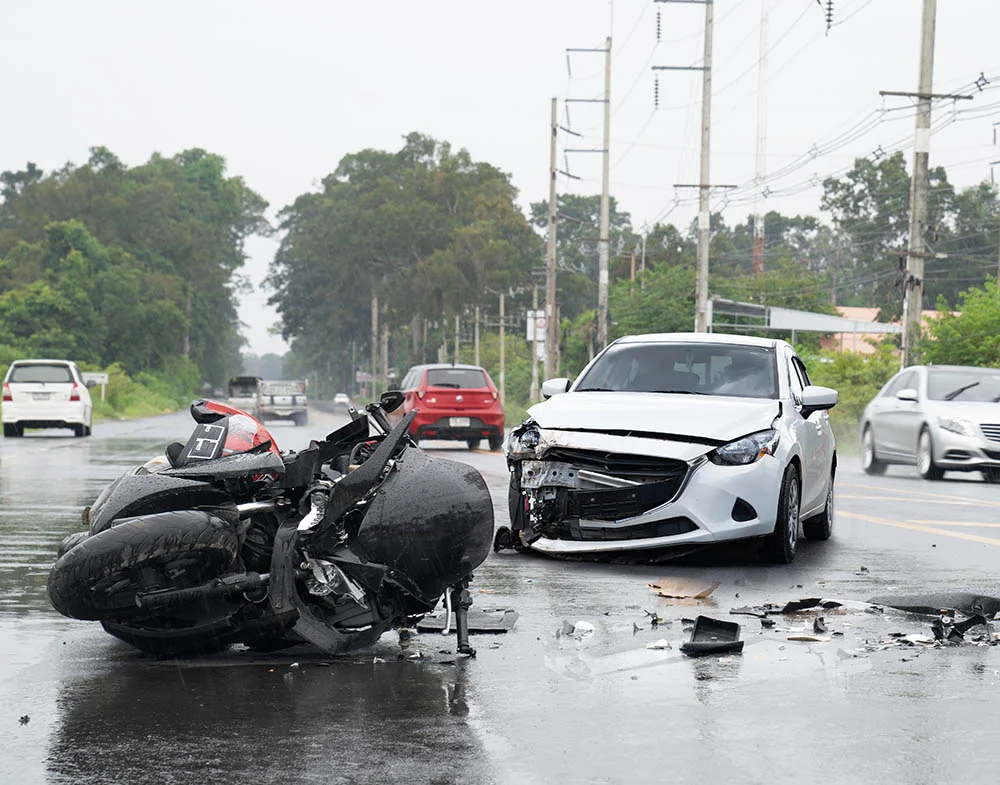
Dangerous, Furious and Reckless Driving Offences
Dangerous, furious and reckless driving in NSW is prosecuted under section 117 of the Road Transport Act 2013 and (where death or grievous bodily harm results) section 52A of the Crimes Act 1900. Penalties range from a 9-month maximum in the Local Court to 14 years imprisonment in the District Court.
About dangerous, furious & reckless driving offences in NSW
“Dangerous driving”, “furious driving” and “reckless driving” are not three separate offences in NSW — they are three of the alternative ways the same offence under section 117(2) of the Road Transport Act 2013 (NSW) can be committed. The same conduct, when it causes a person’s death or grievous bodily harm (GBH), is charged instead as the much more serious indictable offence under section 52A of the Crimes Act 1900 (NSW). Related conduct — pursuing or menacing another vehicle with intent to cause harm — is prosecuted as predatory driving under section 51A of the Crimes Act 1900.
Which charge you are facing matters enormously. A section 117(2) offence is summary, heard in the Local Court, with a maximum of 9 months imprisonment on a first offence. A section 52A or 51A offence is strictly indictable — heard in the District Court, with maximum penalties up to 14 years.
Section 117 Road Transport Act 2013 — driving furiously, recklessly, or in a manner dangerous to the public
Section 117(2) of the Road Transport Act 2013 provides:
A person must not drive a motor vehicle on a road furiously, recklessly or at a speed or in a manner dangerous to the public.
The prosecution must prove, beyond reasonable doubt:
- You drove a motor vehicle;
- The vehicle was on a road or road-related area (as defined in the Act); and
- You drove it in one or more of the following ways — furiously, recklessly, at a speed dangerous to the public, or in a manner dangerous to the public.
What “furious”, “reckless” and “dangerous” mean
The Act does not define these terms — they take their ordinary legal meaning, refined by NSW case law:
- “Furious” driving: driving with great haste, anger or aggression — eg high-speed pursuit of another vehicle, lane-weaving, tailgating in rage.
- “Reckless” driving: driving with an actual awareness of, but indifference to, a real risk of serious consequences to other road users (subjective recklessness).
- “In a manner dangerous to the public”: an objective test — the manner of driving must give rise to a real, not merely speculative, danger to a person who might reasonably be expected to be on or near the road, judged against the standard of a reasonably prudent driver (R v Buttsworth; Jiminez v The Queen).
- “At a speed dangerous”: similarly objective — the speed must be one that, in the circumstances, posed a real danger to the public. The speed limit is relevant but not determinative; even speeds within the limit can be “dangerous” given conditions.
The “public” includes potential road users, not just those actually present at the time.
Section 52A Crimes Act 1900 — dangerous driving occasioning death or grievous bodily harm
Where the same dangerous, intoxicated or excessive-speed driving causes the death of, or grievous bodily harm to, another person, the charge is brought under section 52A of the Crimes Act 1900 — a strictly indictable offence dealt with in the District Court.
The four offences under section 52A
| Subsection | Offence | Maximum |
|---|---|---|
| s 52A(1) | Dangerous driving occasioning death | 10 years |
| s 52A(2) | Aggravated dangerous driving occasioning death | 14 years |
| s 52A(3) | Dangerous driving occasioning grievous bodily harm | 7 years |
| s 52A(4) | Aggravated dangerous driving occasioning GBH | 11 years |
Elements of the section 52A offence
For each version, the prosecution must prove the accused was driving a vehicle that was involved in an impact occasioning the death of, or GBH to, another person, and that at the time of the impact the accused was driving:
- Under the influence of intoxicating liquor or of a drug; or
- At a speed dangerous to another person or persons; or
- In a manner dangerous to another person or persons.
“Impact” includes the vehicle overturning, the vehicle leaving the road, an object falling from the vehicle, an occupant being thrown out, or an impact with another vehicle, a person, or an object on or near the road.
Circumstances of aggravation — section 52A(7)
A section 52A offence is aggravated (increasing the maximum to 14 years for death or 11 years for GBH) if any one of the following was present at the time of the impact:
- A prescribed concentration of alcohol of 0.15 or more (high-range PCA) was present in the accused’s breath or blood;
- The accused was driving at a speed more than 45 km/h over the speed limit;
- The accused was driving to escape pursuit by a police officer; or
- The accused’s ability to drive was very substantially impaired by a drug, or a combination of drugs, or a combination of a drug and alcohol.
Section 52A(8) defence
Section 52A(8) provides a complete defence if the accused proves, on the balance of probabilities, that the death or GBH was not in any way attributable (whether as the result of the intoxication, the dangerous speed, or the dangerous manner) to the conduct alleged. This is a narrow but important provision in cases where the impact was caused by the deceased or victim themselves.
Predatory driving — section 51A Crimes Act 1900
Section 51A makes it an offence for the driver of a vehicle, while in pursuit of or travelling near another vehicle, to:
- Engage in a course of conduct that causes or threatens an impact involving the other vehicle; and
- Intend by that conduct to cause actual bodily harm to a person in the other vehicle.
The offence is complete on the threat of an impact — actual collision is not required. Maximum penalty: 5 years imprisonment (when dealt with on indictment in the District Court; 2 years if dealt with summarily). Predatory driving is often charged in road-rage incidents, debt-collection pursuits, and chases that fall short of, but overlap with, attempted assault or affray.
Maximum penalties — at a glance
Section 117(2) Road Transport Act — furious / reckless / dangerous driving (no death or GBH)
First offence
- Maximum fine: 20 penalty units ($2,200)
- Maximum imprisonment: 9 months
- Automatic disqualification: 3 years
- Minimum disqualification: 12 months
- Maximum disqualification: unlimited (at the court’s discretion)
Second or subsequent offence
- Maximum fine: 30 penalty units ($3,300)
- Maximum imprisonment: 12 months
- Automatic disqualification: 5 years
- Minimum disqualification: 2 years
- Maximum disqualification: unlimited
A section 117(2) offence is a major offence under section 4 of the Road Transport Act — it counts toward the “second offence” escalation regime for other major offences (eg PCA, refuse breath analysis) within 5 years.
Section 52A Crimes Act — dangerous driving causing death or GBH
| Offence | Maximum imprisonment | Minimum / automatic disqualification |
|---|---|---|
| Dangerous driving occasioning death — s 52A(1) | 10 years | 3 years minimum / disqualified for life automatically (court can reduce, not below 12 months) |
| Aggravated dangerous driving occasioning death — s 52A(2) | 14 years | as above |
| Dangerous driving occasioning GBH — s 52A(3) | 7 years | as above |
| Aggravated dangerous driving occasioning GBH — s 52A(4) | 11 years | as above |
Section 51A — predatory driving
- Maximum: 5 years imprisonment (District Court) / 2 years (Local Court if dealt with summarily)
- Automatic disqualification: not statutorily fixed under s 51A, but a licence disqualification will almost always follow on conviction.
Sentencing factors
In sentencing for section 117(2), section 52A or section 51A, the court applies the Crimes (Sentencing Procedure) Act 1999 and considers:
- Objective seriousness — what made the driving dangerous, furious or reckless (speed, intoxication, duration, road and traffic conditions, whether others were endangered or injured);
- The consequences — death, injury, property damage, near-miss;
- Moral culpability — momentary inattention vs sustained, deliberate dangerous driving;
- Intoxication — the presence of alcohol or drugs;
- The accused’s driving and criminal history;
- Early plea of guilty and utilitarian discount;
- Remorse, insight and rehabilitation steps (eg Traffic Offender Intervention Program, counselling);
- The need for personal and general deterrence — particularly weighty for s 52A: see R v Whyte (2002) 55 NSWLR 252, the guideline judgment for dangerous driving occasioning death and GBH, which identifies a “typical case” attracting a custodial sentence;
- Subjective features — age, character, employment, family circumstances; and
- Hardship that would result from a conviction or disqualification.
For section 52A matters, R v Whyte remains the leading guideline and is reformulated and reinforced by later Court of Criminal Appeal authority. A custodial sentence is the starting point for “typical” cases of dangerous driving occasioning death.
Defences and arguments
The strongest defences turn on the elements of the offence and the manner of driving evidence.
Challenging the “manner” of driving
- Was the driving really “dangerous”? The Crown must prove the driving created a real, not theoretical, danger to the public. Brief inattention, momentary error or skidding on an unexpected surface may not meet the threshold.
- Was it “reckless” or “furious”? Recklessness requires foresight of risk. Furious driving requires haste or aggression beyond carelessness.
- Expert evidence (accident reconstruction, mechanical defects, road condition) can be decisive in s 52A matters.
Causation (s 52A)
The Crown must prove the manner / speed / intoxication of driving caused the impact and the death or GBH. Where the deceased or victim’s own conduct, a third party, or a mechanical failure broke the chain, section 52A(8) may apply: the accused proves, on the balance of probabilities, that the death or GBH was not in any way attributable to the prohibited conduct.
Honest and reasonable mistake of fact
Available where a mistaken belief (eg as to a road condition, the presence of a child, or the operation of the vehicle), if true, would mean no offence was committed.
Necessity / duress
Narrow but available where you were forced to drive in the manner alleged to avoid greater harm (eg medical emergency, escape from violence). The conduct must be proportionate to the threat.
Identity / not the driver
The Crown must prove you were the driver — relevant where there is no direct identification, only registered owner inferences.
Not on a “road” or “road-related area”
Section 117(2) requires the driving be on a road. Driving on entirely private land may take the conduct outside the section (though s 52A is not so limited).
Procedural / evidentiary challenges
- Admissibility of breath / blood analysis results in s 52A cases (chain of custody, two-hour rule, hospital sample procedures);
- Admissibility of police pursuit and dash-cam footage;
- Compliance with police powers on stopping, arrest and questioning.
Dangerous, furious & reckless driving FAQs
What is the difference between dangerous, furious and reckless driving?
All three are alternative ways of committing the same offence under section 117(2) of the Road Transport Act 2013. “Furious” denotes haste, anger or aggression; “reckless” requires subjective awareness of and indifference to risk; “in a manner / at a speed dangerous to the public” is the objective test of real, not theoretical, danger. The Crown only needs to prove one to secure a conviction.
Will I go to jail?
For a section 117(2) first offence with no aggravating features, imprisonment is available (max 9 months) but a non-custodial outcome — a fine, Conditional Release Order or Community Correction Order — is more common, particularly with an early plea, insight and a clean record. For a section 52A offence, R v Whyte effectively makes a custodial sentence the starting point. Even on a plea, avoiding full-time custody in s 52A matters requires careful preparation — psychological reports, evidence of rehabilitation, and well-prepared submissions on objective seriousness.
What counts as “dangerous” driving?
The test is objective: would a reasonably prudent driver, knowing what the accused knew, recognise that the manner or speed of driving created a real risk of harm to a person who might reasonably be expected to be on the road? Examples include excessive speed for conditions, weaving across lanes, ignoring red lights, prolonged inattention, driving while heavily fatigued, or aggressive tailgating. A momentary lapse — looking at the radio for a second — generally does not meet the threshold and is more appropriately charged as negligent driving.
What is “aggravated” dangerous driving?
Under section 52A(7), the offence is aggravated where, at the time of the impact, any one of the following applied:
- High-range PCA (0.15+) in your breath or blood;
- Speed more than 45 km/h over the limit;
- Driving to escape police pursuit; or
- Very substantial impairment by drugs (or drugs combined with alcohol).
Only one needs to be established. Aggravation increases the maximum from 10 to 14 years (death) and from 7 to 11 years (GBH), and significantly affects starting-point sentencing.
Do I lose my licence?
Yes. On a section 117(2) first offence the automatic disqualification is 3 years, reducible to a minimum of 12 months if you persuade the court to reduce it. On a second offence, it is 5 years automatic / 2 years minimum. For section 52A offences, a person convicted is automatically disqualified for life (with a minimum of 12 months on application). Disqualification is a separate consequence from any prison or community-based sentence and applies in addition to it.
Can I get a section 10 (no conviction) for furious or reckless driving?
It is possible but uncommon. A non-conviction outcome would generally require: low objective seriousness, an early plea, a clean record, completion of a Traffic Offender Intervention Program, strong subjective material (psychologist’s report, character references, evidence of rehabilitation) and disproportionate collateral consequences from a conviction (eg employment, visa, professional registration). The Crown frequently appeals s 10 outcomes for s 117(2) where injury or sustained danger is involved, so the strategy must withstand appellate scrutiny.
Is dangerous driving the same as negligent driving?
No. Negligent driving under section 117(1) is a less serious objective test — failing to exercise the care a reasonable driver would. Dangerous driving under section 117(2) requires a higher level of risk-creation — driving that actually endangers, or could endanger, the public. Negligent driving (no injury) is usually dealt with by infringement notice; dangerous driving is always a court matter.
Can I be charged with both section 117 and section 52A?
Not for the same impact. Where death or GBH results, the Crown will charge under s 52A. Section 117(2) is the appropriate charge where the dangerous driving did not occasion death or GBH (or where the causal link cannot be proved beyond reasonable doubt).
Charged with dangerous, furious or reckless driving? Contact us today
Dangerous, furious and reckless driving charges sit on a spectrum that runs from a Local Court fine through to 14 years in the District Court. The strategy depends entirely on which section you are charged under, what the evidence shows about the manner of driving, and whether any aggravating features are alleged. The decisions made in the first weeks — whether to engage early with the Crown, what expert evidence to brief, whether to negotiate a downgrade from s 52A to s 117(2) — shape the outcome.
Karnib & Co. acts for dangerous driving and section 52A matters across NSW from our Liverpool and Wollongong offices.
Contact us for a free initial consultation. We are available 24/7 for urgent matters including arrests, bail applications and licence suspension appeals.

Need legal advice?
Speak to our team today. Available 24/7.